










-
 Home
Home -
 Contact
 -
 Database
 -
 more
more
Welcome at UPsolute Chiptuning
More than 40 UPsolute Distributors worldwide and more than 80.000 optimized Vehicles made UPsolute to one of the world leading ECU remapping Company. Choosing UPsolute as your partner will give you the confidence and quality you deserve.
Years Experience
Cars tuned
Facebook fans
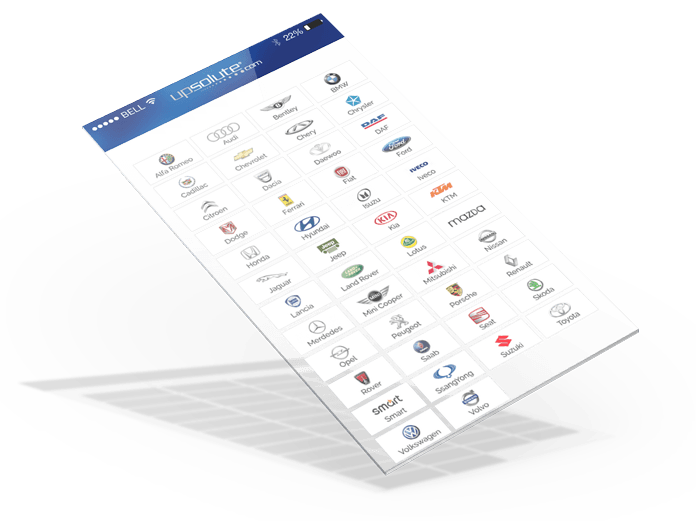
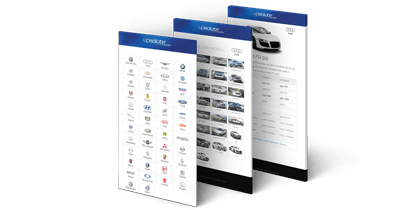
Vehicle Database
You want to know the secret Power that's hidden in your car? Just find out in our UPsolute Car Database.| Location | ||
| +43 2253 8809 | ||
| Mo-Fr: 9:00-18:00 | ||
| Contact Form | ||















 Facebook fans
What Customers say about us:
Skoda Octavia 2,0 TDi RS
Wir haben vor 3 Jahren unseren Skoda von UPsolute tunen lassen und waren sehr skeptisch.
Bereits bei der Abholung waren wir von der, deutlich spürbaren, Veränderung positiv überrascht!
Inzwischen ist er mit dem Tuning ca.150000km gefahren - völlig ohne Probleme, ohne Ölverbrauch und er macht jeden Tag aufs neue Spaß!
Fazit: Jederzeit wieder!!!
written by Kunde, 07.01.2013
BerlinVW MK6 Golf R (2011)
Big thanks for the perfect service of Paolo @ Upsolute Leb and the impressive expertise of Ali @ Upsolute HQ! My car has been custom tuned until we reached an optimal result. Now it is litterally a balistic missile with strong constant power and torque delivery throughout the rev range. The recent DSG reflash provided by Ali has also allowed for the power limitations to be removed and the... View More..
written by e.mattar, 27.03.2013
Beirut, LebanonGolf MkV TDI 105bhp
Peter Carey of Logic Automotive in Rathcoole Dublin, upgraded a mk4 Golf tdi for me 10 years ago with great results. I recently purchased a mkv TDI which I had no hesitation to give to Peter to work his magic. The car is transformed, with a great improvement in torque and power which when driven with respect delivers surprising range. I am now averaging 5ltr per 100, but on some journeys I am... View More..
written by Richard, 22.12.2011
Co Dublin2006 BMW 325XI
Just unbelievable!! I can not believe how much more powerful and smooth the car feels, I will for sure spread the word about this company and chip. I mailed it to Rene in North Carolina who is just splended to work with, great communication! Thanks so much and I will be chipping my X5 as well!!
written by Jose Pocasangre, 04.03.2009
Sewickley USAAudi A3 2.0TDI
I got my car chipped the week before x-mas, and it was truly a big x-mas present I made to myself! I'm still impressed of the massive power my Audi A3 2.0TDI is developing! I was never unsatisfied with the stock power, but now the engine is feeling free and powerful, like it should be from the factory! Acceleration is smooth but powerful! I will definitely come by with my wifes polo very soon!
written by Ricky, 28.12.2007
Graz, AustriaSeat Exeo
Freundlichkeit Note:1
Beratung Note:1
Ergebnis ein Wort genügt:SPITZE
Da mein Auto von unten her sehr schwach war,trotz 143Ps, entschloss ich mich ihn tunen zu lassen. Das Resultat,ich hätte es schon viel früher machen lassen sollen. Kann die Firma Upsolute nur empfehlen.
written by Alex Hlavacek, 21.03.2011
Mödling AustriaPassat Sport
I had my B5.5 02 Passat Sport upgraded a couple of months ago. Since then my mpg has gone up from 48 to 53mpg. Performance has increased from 130 to 164bhp and made the car far more responsive and more grunt in lower rev range. Simon Coe performed the upgrade, very professional. Thoroughly satisified with the upgrade. Thank you.
written by Dominic Mills, 26.07.2006
Cambridge, CAMBS UKSUPER C63
SUPER SUPER SUPER FAST AND COOL,WE DRIVE IT TO 320KM/H!!!!!WE COULD FLY!!!!!ANYWAY,THANKS FOR YOUR PERFECT TUNING.
AND THE PRICE IS VERY GOOD!!!
written by WONG, 27.07.2010
WENZHOUN,CHINAGolf TDI PD150
My Golf TDI PD150 now produces 180+ BHP and 425Nm Torque and still does 50 mpg! It absolutely flies. Only problem is that there is not enough traction to deal with the torque! It is absolutely immense and leaves a lot of bigger cars standing. 0-60 is around 6.5 sec. You beauty!
written by Jonathan Cook, 24.11.2004
London, UKChrysler Voyager
Ich habe vor 4 Jahren meinen Voyager in der Ö-Version bei KM 20.000 von 121 auf 170 PS tunen lassen. Inzwischen habe ich fast 200.000 km am Tacho, das Auto fährt problemlos, der Dieselverbrauch ist um 0,3 - 0,5 l gesunken. Ich genieße das tolle Drehmoment und nicht die Höchstleistung, außer fallweise beim Überholen.
Fahre fast nur Langstrecke, Autobahnen eher gemütlich (120 - 130 km/h laut... View More..
written by Alfred, 28.07.2012
Austria1.9TDi Jetta
I had my 1.9TDi Jetta chipped by Keith at UPsolute Johannesburg, SA. I chose UPsolute after investigating the different options available. UPsolute had the best price relative to the proven gains offered, the quality of the 'product' and the professional and knowledgeable service levels from Keith and Gavin. Was it worth it? YES. Best value for money mod ever! Turbo lag is virtually eliminated, power... View More..
written by Bruce, 04.02.2005
Johannesburg, South AfricaSeat leon 20VT
Hi everybody,
Just recently i was still in doubt,weather or not to chip my seat leon 20VT(180 HP). After seeing this site i contacted evry schuiling about it and we made a appointment. What he did to my car is magic. Every time i am driving my car it seems like it has a new engine. it has the same power in 2nd gear as it had before in first. It is realy fantastic. So if there is anyone out there still... View More..
written by colin tan, 18.02.2013
spijkenisse, nederlandGolf GT TDI
I just recently had my 2002 Golf GT TDI 130 chipped. I did not know what to expect. After getting it chipped my first impressions where that it was ok but nothing special, until I realised that I was driving with my ESP switched on. Once turned off the mid range power dramatically increased.
However,I am amazed at how much smoother the car feels and still cannot believe how much my fuel economy has... View More..
written by Robert Ryan, 20.04.2013
Cleveland, ClevelandAudi A4 & VW Jetta
we just tuned 3 cars. 2 audi a4 and one vw jetta tdi. I would never believe the result until i feel it myself after the absoulte chip is intalled in your vehicle, and the professional way which was done by John explaining everything in detail and how it works, was a great help also. He is number one, and it was pleasure to spend the time with him. Believe me try it and you will not be disappointed. It... View More..
written by Armen Kamozian, 25.04.2004
saddle brook, nj USABMW 116D
Hab meinen BMW im Juli bei upsolute chippen lassen von 116 auf 178 ps und bin begeistert. Steige jeden Tag mit einem lächeln in mein Auto ein! Das Fahrzeug hält jetzt locker mit einem Golf 5 GTI mit und dass bei einem Traumverbrauch von 6,4 bei sehr sportlicher Fahrweise! Drifts sind nun auch kein problem mehr. Bin sehr sehr sehr zufrieden mit upsolute.
Kann ich nur weiterempfehlen!!
Bin nun... View More..
written by Sven, 29.12.2013
AustriaVW Bora TDI 110
Hi,
had my car, a VW Bora TDI 110 HP, chipped by VW to 130. No total satisfaction here, but then I met Evry and he not only chipped my car one time but a second and third time too!! Talk about service here! The first time I got real raw power that the engine couldn't quite handle in low RPMs, so he tuned it a little bit back there and it still runs like posessed!! Thanks Evry, you sure have a happy... View More..
written by Raymond, 23.04.2011
Netherlands, NetherlandsFord Focus TDCi
Muchas gracias upsolute, y muchas gracias Frank (Chipodromo Vilanova). Los resultados en mi Ford Focus TDCi han sido espectaculares y satisfactorios. Muchos animos a todo el que todavia dude en hacer la repro|dq| en su coche, estais en manos de profesionales.
Salu2 Jordi|dq|
written by Jordi, 05.02.2004
Vilanova i la Geltru, Barcelona España